
How To be Tidal
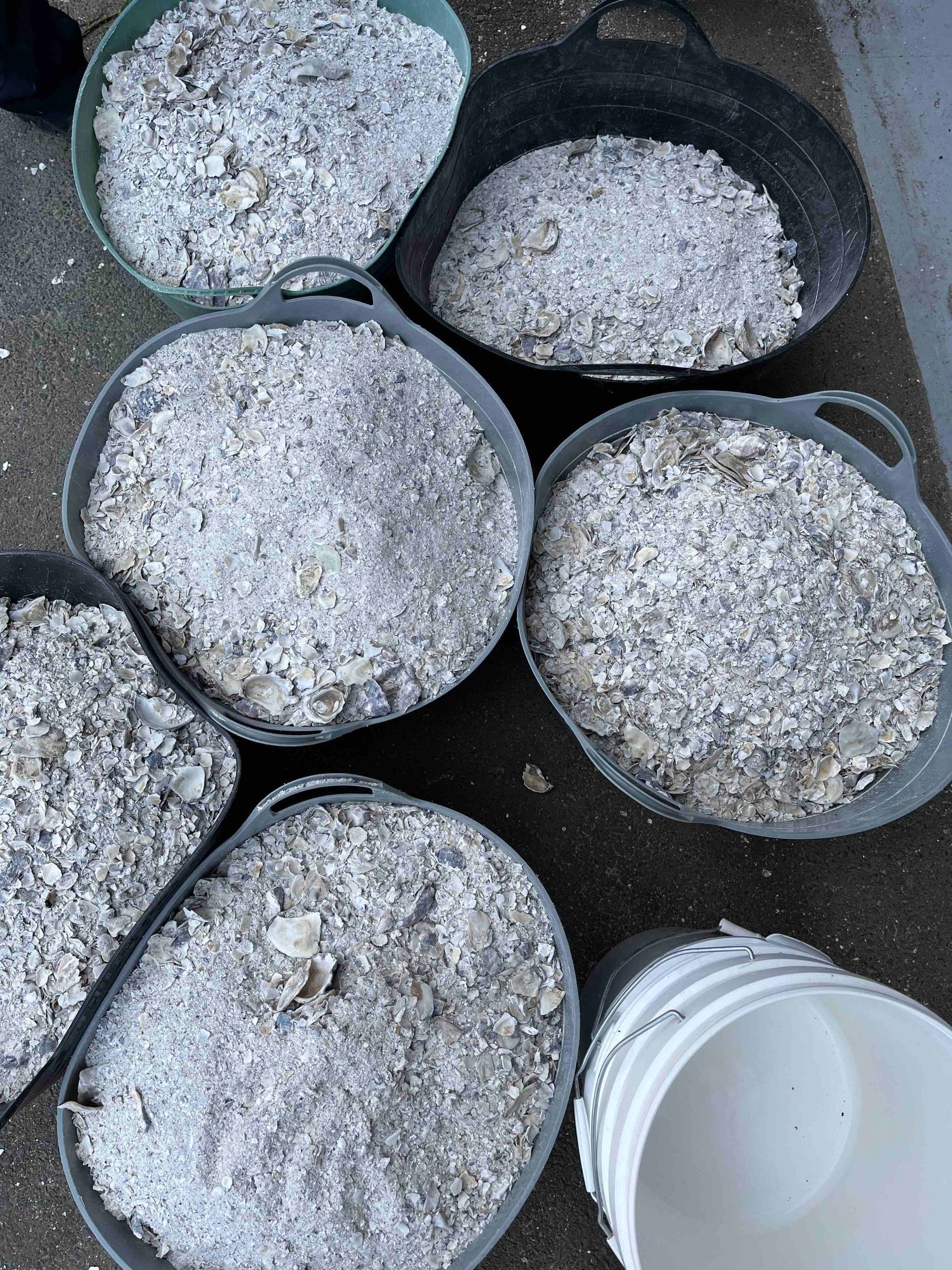
An investigation into aquaculture waste streams and the valorisation of oyster shell waste from the food industry. This project produced a suite of novel biomaterials and surfaced new design methodologies for working with marine-based feedstocks.
How To Be Tidal was undertaken in collaboration with Australia’s Oyster Coast and a cooperative of oyster farms located on Jerringa Country (Greenwell Point, New South Wales).

Transitioning from fossil derived materials and systems towards sustainable, biogenic alternatives requires radially rethinking our approach to feedstocks and supply chains. In New South Wales oyster farming is the most valuable aquaculture industry with an annual production of over 100 million oysters across 41 estuaries, from Eden to the Tweed River.


Extreme weather and the impacts of climate change mean what is abundant in one season could be scarce in the next. Fluctuations in the volume of available organic waste becomes inevitable. How do we design with this in mind?


Oysters are their own marine environment. They are bivalves that filter water and houses for other living organisms including mussels, fish, algae and a variety of aquatic invertebrates. Their very existence, including their decomposition, is crucial in promoting biodiversity across a range of marine habitats and in promoting healthy waterways.


If we are going to design with waste matter in ways that aren’t extractive and that don’t deplete natural marine ecosystems and resources then we need to be tidal.
Allowing for ebbs and flows in volume, tolerating times of scarcity and abundance, and changes that can be based on season, weather, and shifts in the environment.


-
Australia’s Oyster Coast
UTS Material Ecologies Design Lab
Bundanon Trust and Art Museum
PALMS Studio + Workshop
Sydney College of the Arts, University of Sydney
Studio & Production Support:
Danielle Devery, Casey Ayres, Robin Hearfield, Kit Bylett, Jordan Ritchie, Seamus Connor, Connie Anthes, Ella Williams, Nicole Beck
-
Scardifield, K., & McLean, N. How to be tidal: designing with waste streams as matter in flow and matter of value. Journal of Cultural Economy, 16(4), 604–614. (2023). https://doi.org/10.1080/17530350.2023.2246994
A weathering, commissioned for Siteworks 2022: From a deep valley, Bundanon Art Museum. -
1. Project development and field research, Kingsford dispatch centre, NSW (2021), Photo: Robin Hearfield.
2-3. Project development and field research, Jerringa Country, Greenwell Point NSW (2021), Photos: Kate Scardifield.
4. Oyster farmers in the Shoalhaven, William Earnest Smith and Andrew Binns Derwent c.1936 Photo: Waite Derwent.
5. Project development and field research, Jerringa Country, Greenwell Point NSW (2021) Photo: Kate Scardifield
6. Project development and field research, Shoalhaven River (2021) Photo: Kate Scardifield.
7-10. Cleaning and processing oyster shell waste (2021), Photos: Robin Hearfield.
11. Project development and field research, Jerringa Country, Greenwell Point NSW (2021), Photo: Kate Scardifield.
12-17. Sydney Rock Oysters (2021), Photos: Robin Hearfield
18-21. Cleaning and processing oyster shell waste (2021), Photos: Kate Scardifield
22-26. Materials development and testing (2021). Photos: Robin Hearfield.