
The Metabolic
Museum
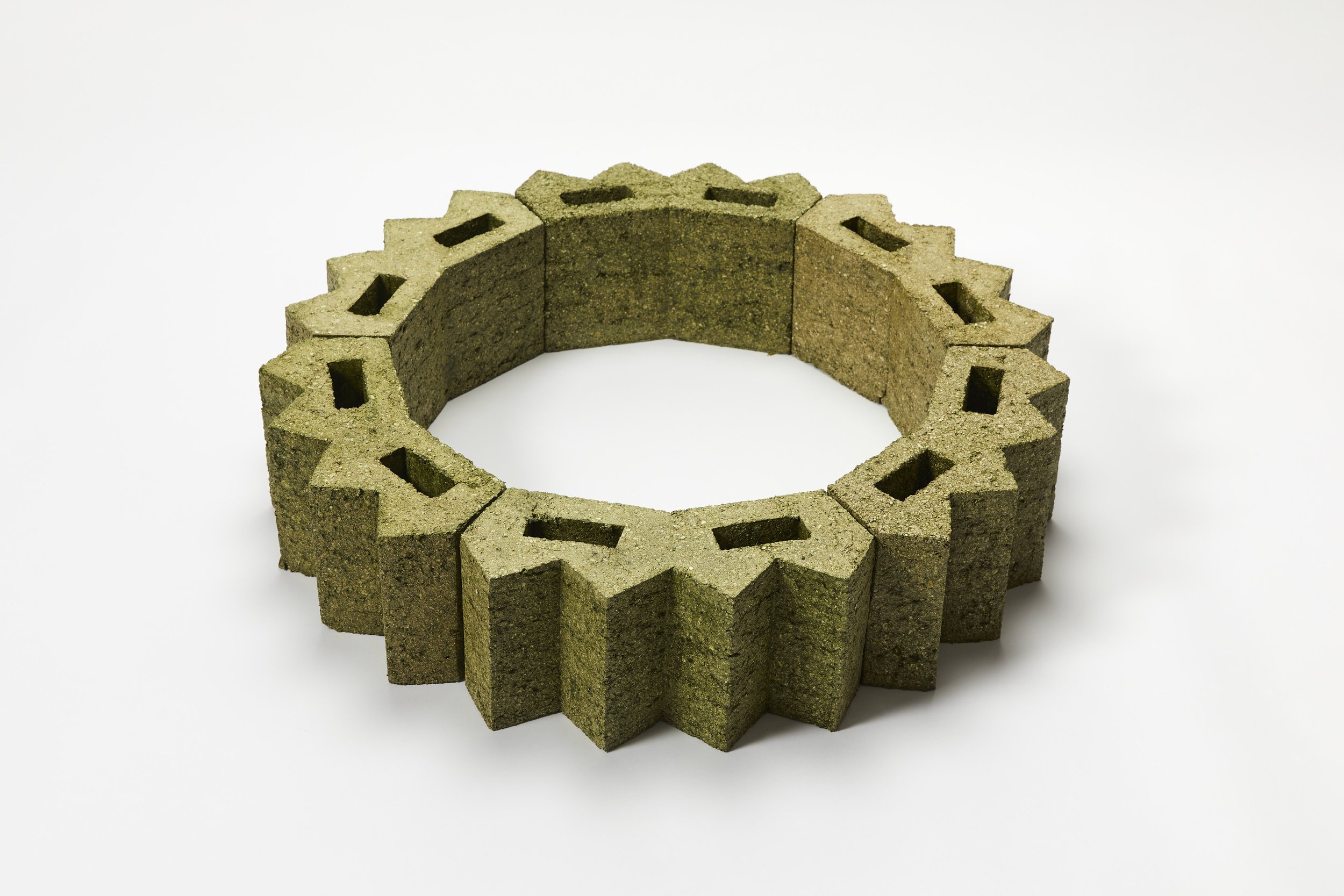
Commissioned for the 2022 Adelaide Biennial of Australian Art, The Metabolic Museum transformed two tonnes of aquaculture waste collected from primary industries, speculating on the new material futures for algae and seaweeds, and their ability to sink and store C02.

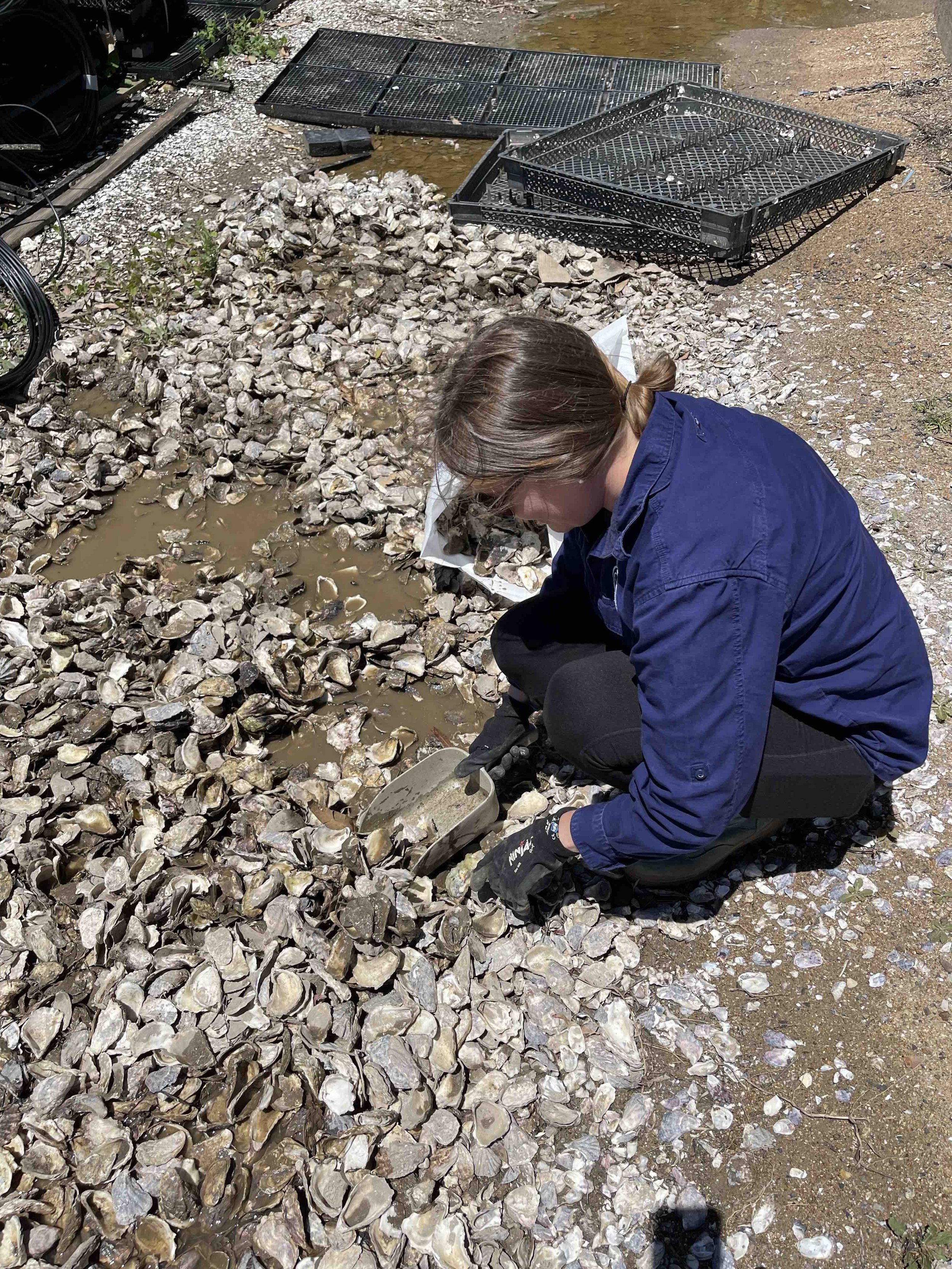
Developed in collaboration with the UTS Climate Change Cluster (C3) and industry partners Pacific Biotechnology and Australia’s Oyster Coast, the research produced a novel biomasonry material for carbon capture and storage and over 100 ‘biobricks’ designed for architectural application and use in building and construction.
Connecting climate, culture and materials science, The Metabolic Museum examined historical uses of seaweeds and seagrasses in construction, alongside intertidal ecosystems and expanding areas of the blue bioeconomy.



The State Herbarium of South Australia supported the research of algae unique to Southern Australian coastlines. Their collection of 90,000 algae specimens is a crucial resource used by botanists and scientists to understand the changing ecologies of our oceans.




-
UTS Climate Change Cluster
Pacific Biotechnology Australia
Australia’s Oyster Coast
State Herbarium of South Australia
Art Gallery of South Australia
Sydney College of the Arts, University of Sydney
This project has been assisted by the Australian Government through Creative Australia, its principal arts investment and advisory body. -
Scardifield, K., McLean, N., Kuzhiumparambil, U., Ralph, P. et al. Biomasonry products from macroalgae: A design driven approach to developing biomaterials for carbon storage. Journal of Applied Phycology 36, 935–950 (2024). https://doi.org/10.1007/s10811-023-03051-7
FREE/STATE, Adelaide Biennial of Contemporary Australian Art, Art Gallery of South Australia (2022) -
1. Project development and field research, Yerroulbine / Balls Head, Cammeraygal Land, NSW (2021), Photo: Robin Hearfield.
2. Urgent Is The Rhythm 2022 (Installation View) Adelaide Biennial of Australian Art, Art Gallery Of South Australia. Algae biomass, oyster shell waste, ratchet strap, form ply. Photo: Saul Steed.
3. Seaweed biomasonry bricks, 6 pieces, 900 mm outside diameter, 200 mm height (2021). Photo: Robin Hearfield.
4. Project development and field research, Yerroulbine / Balls Head, Cammeraygal Land, NSW (2021), Photo: Robin Hearfield.
5. Specimen record for Sargassum ambigium collected by H.S.B Womersley, South Australia, 1960. Collection of the National Herbarium Victoria.
6. Project development and collections research, specimen record for Ulva australis, 1984. The State Herbarium of South Australia. Photo: Kate Scardifield.
7. Kelp water container from Tasmania made from bull kelp (Durvillaea potatorum). Dated 1850. Source: National Museum of Australia.
8. Traditional Læsø house with eelgrass roof, Frilandsmuseet, Denmark. Photo: Kate Scardifield.
9-10. Project development and materials research (2021), residual seaweed waste. Photos: Kate Scardifield.
11-12. Materials testing, algae, bio-based binders and composites. Photos: Robin Hearfield.
13. Project development and collections research, specimen record for Ulva arasakii, 1969. The State Herbarium of South Australia. Photo: Kate Scardifield.
14. Project development and field research (2021), Photo: Kate Scardifield.
15. Project development and field research, Australia’s Oyster Coast (2021), Photo: Gabrielle Cowley.
16-19. Project development and materials research. Photos: Kate Scardifield.
20. Seaweed biomasonry bricks, 3 pieces measuring 800 × 250 × 400 mm each (2021). Photo: Robin Hearfield.
21. Project development and field research, intertidal studies, Bidjigal and Gadigal Land, NSW (2021). Photo: Kate Scardifield.
22-23. Seaweed biomasonry development (2021). Photos: Kate Scardifield
24. Seaweed biomasonry bricks, 5 pieces. Photo: Robin Hearfield.